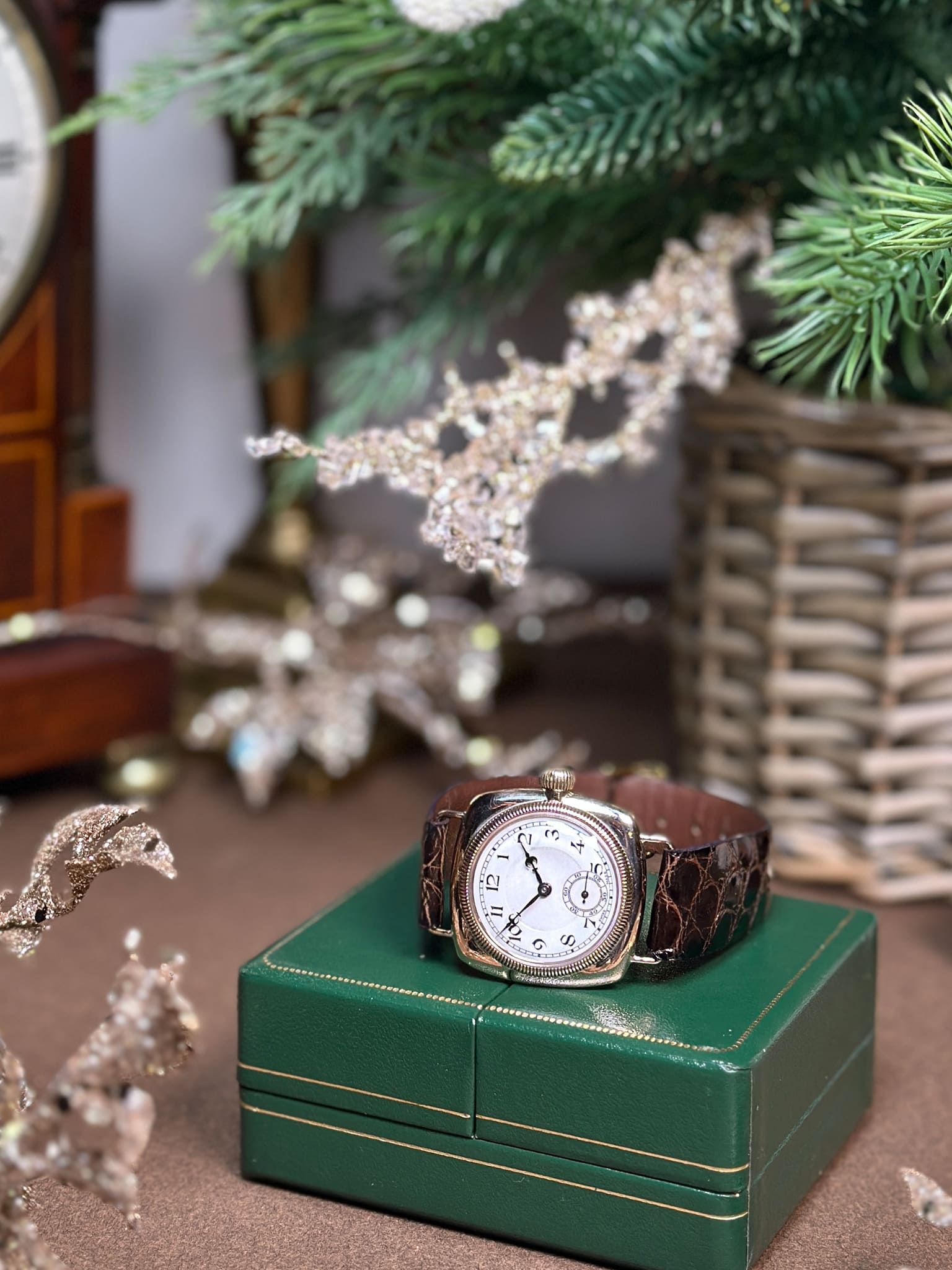
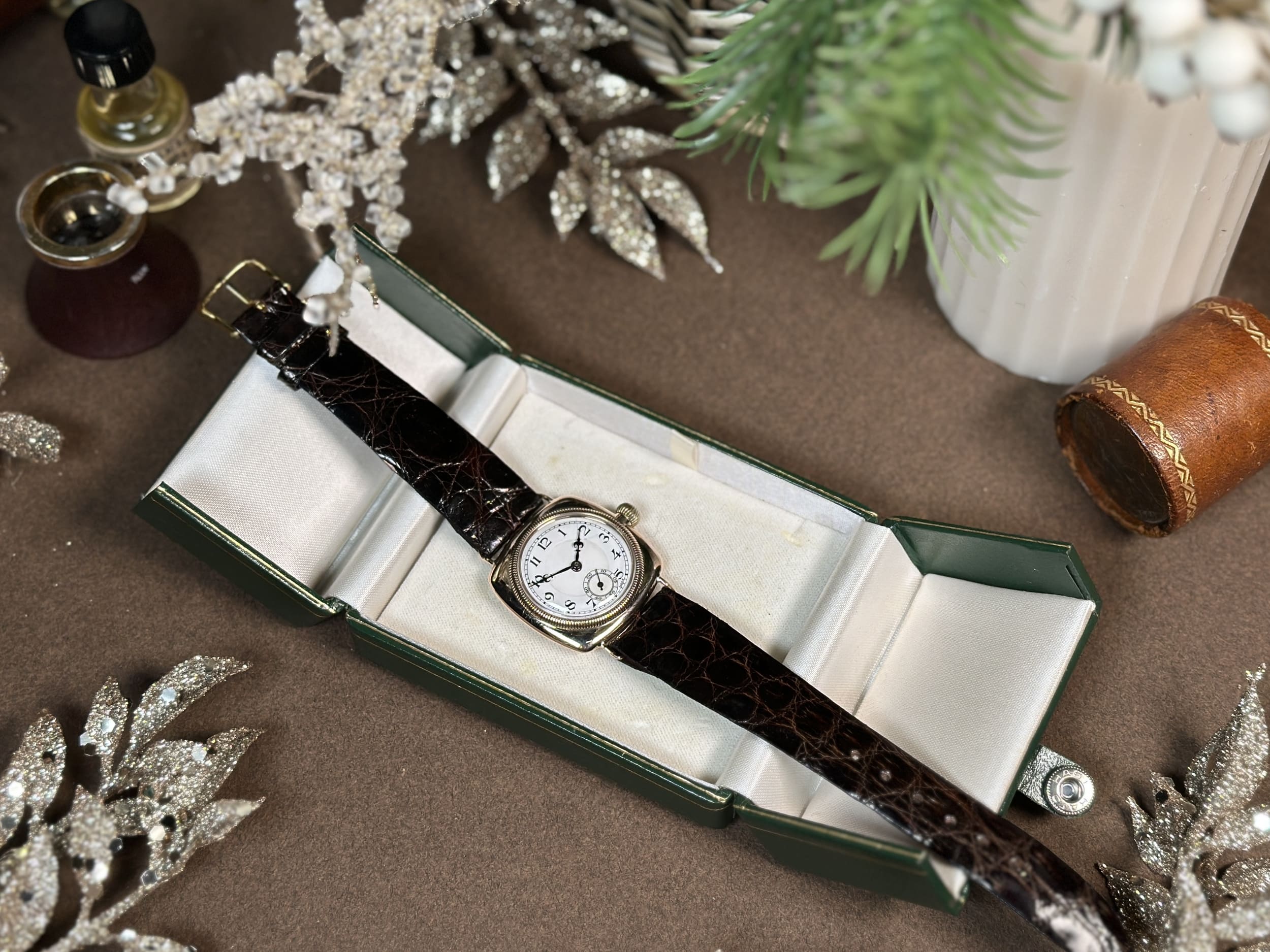
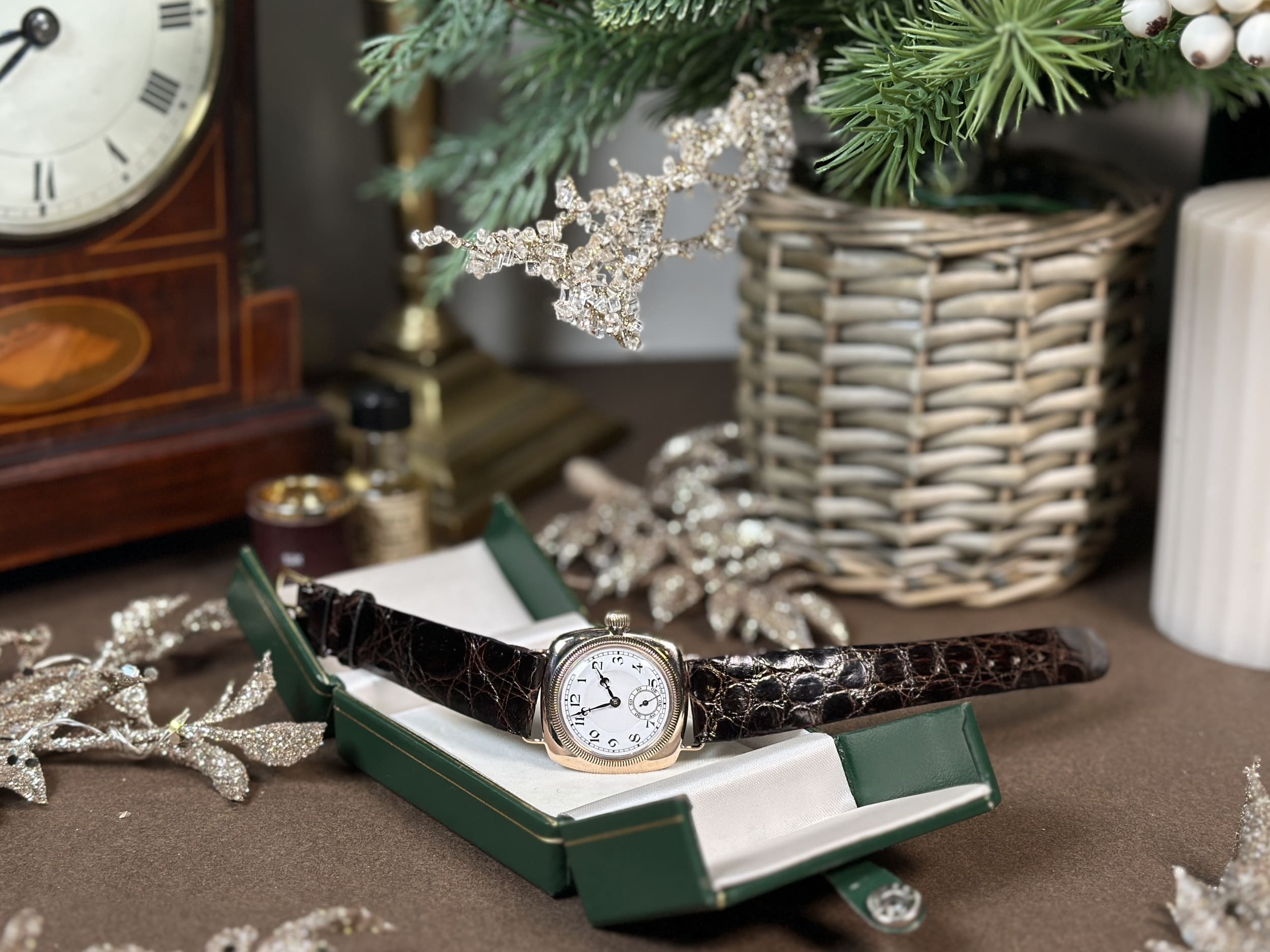
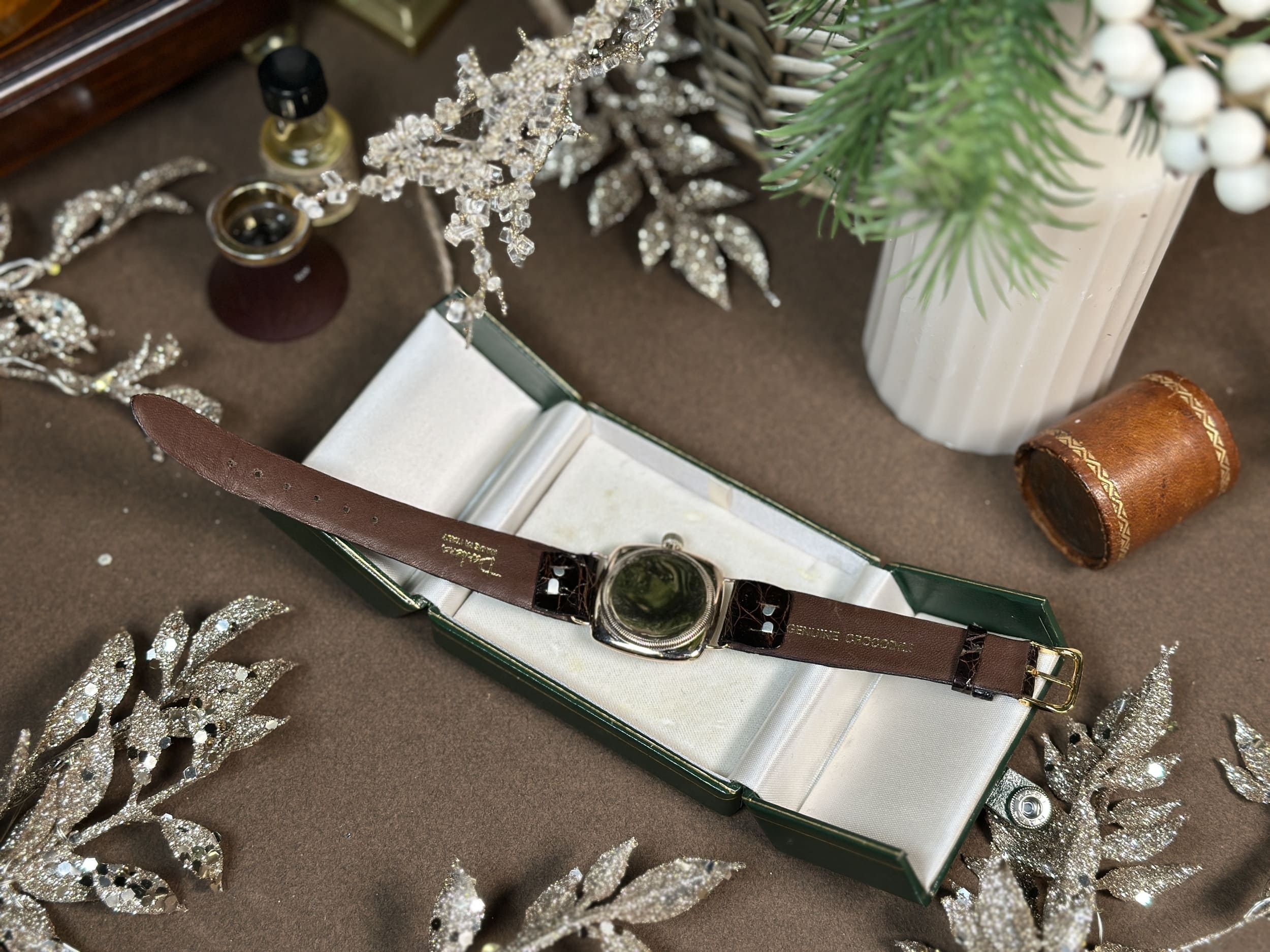
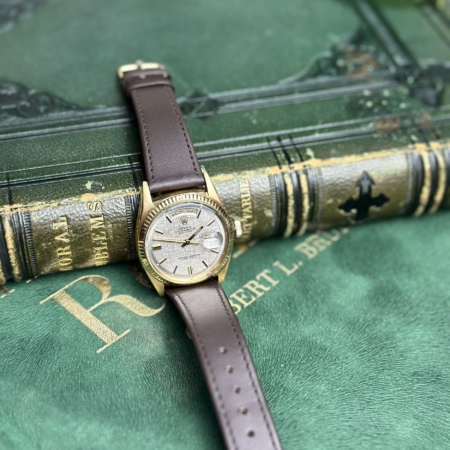
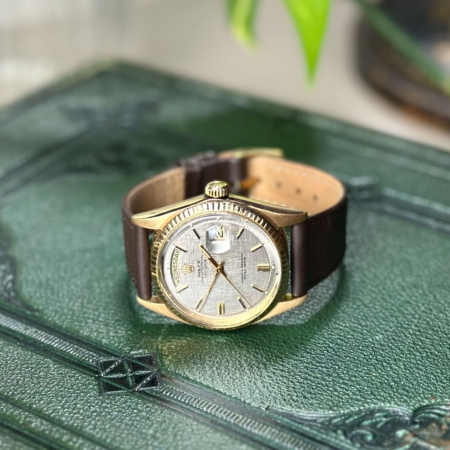
1930’s Rolex Oyster Cushion Case w/ Enamel Dial in 9ct Gold
£3,450.00
includes our 24 month warranty
The cushion-case Rolex Oysters of the 1930s represent an important transitional moment in the brand’s development, carrying forward Rolex’s earliest waterproof innovations while refining the proportions that would later define the modern Oyster line. These cases were milled with thick walls and softly rounded edges, giving them both structural rigidity and a distinctive Art Deco presence on the wrist. Their screw-down back and patented Oyster crown were cutting-edge at the time, forming the basis of Rolex’s reputation for practical waterproof wristwatches.
What separates many 1930s examples from later generations is the use of fired enamel dials. Unlike printed metal dials, enamel was fused at high temperature, producing a surface that resists ageing and retains remarkable sharpness even after decades. The crisp, glossy finish allowed for beautifully rendered numerals and railway tracks, often executed in a bold, legible style suited to the instrument-watch aesthetic of the era. Surviving enamel dials are highly prized because they were both costly to produce and vulnerable to damage, making intact originals comparatively rare.
Inside these early Oysters, Rolex typically fitted manually wound movements sourced from well-respected ébauche makers and upgraded to Rolex’s standards of the period. Though simple compared to later in-house calibres, they were reliable, easily serviced, and well matched to the waterproof case design. As a whole, a 1930s Rolex Oyster in a cushion case with an enamel dial captures the brand at a crucial stage: technically ambitious, aesthetically confident, and laying the groundwork for the iconic models that would follow.